quartz 代码乱看
代码乱看入门
2023-01-03
- 阅读quartz源码example中的代码, 很快就能知道quartz的用法, 对job, trigger, schedule的概念也能很快掌握: job就是具体执行的任务代码; jobdetail用来对任务做一些额外的描述; trigger是定时信息, 何时触发任务, 周期性如何; schdule就是整体的触发调度.
- 跟着example中的代码一点点调入每个具体的方法定义, 比如schedule factory的initiate, 比如schedule的start, 然后一点点补全视图, 最后发现核心就在几个类上面: scheduleThread用来调度分发任务;worker threadpool用来执行具体的任务; jobstore用来将job和trigger的状态保存记录, 要么记录在ram内存里, 要么记录在jdbc数据库里. 每次要调度的任务都从数据库里获取某个时间间隔内的 latest triggers, 然后由scheduleThread转发到threadPool中空闲的线程.
- 看起来quartz只支持一些简单的时间周期任务, 比如cron定义的时间, 或是java代码定义的时间, 并没有什么dag有向无环图这类调度的概念, 不支持上下游调度, 估计得业务代码自己去实现了.
- 执行的任务需要implement quart job, 看起来不支持远程调用? 估计得在job里配置远程调用, 然后worker thread调用本地的job, 再由job去触发远程任务.
- 计算下一步执行的trigger算是一个关键的逻辑, 每次都批量从数据库里获取最近要执行的trigger调度任务, 然后一个个处理, 接下来再获取下一批次. 猜测每个调度任务的下一步执行信息记录在数据库里, 执行的时候再去判断下一次的调度信息, 再保存到数据库里, 这样调度的时间模型会简化许多. 猜测这里还没详细看代码, 不过估计应该是这么设计的.
- 整体而言, 代码里线程和锁满天飞, jobstore里的存储也非常混乱, 看起来还是很耗费时间的, 一两天只能看个入门, 深入的话得在实践中一边测试一边定位了.
- 就算是企业级的调度组件, 线程和锁满天飞, 看起来也非常容易出错, 估计是因为迭代了很久才稳定下来. 所以大家其实差不多, 核心链路确定没问题的话, 有问题解决问题.
一些疑问点
- quartz的集群化是如何处理没怎么看明白. 看了一些文档, 看起来使用了jdbc的持久化来支持多个quartz实例的运行, 更像是把worker threadpool这种工作线程集群化管理来, 不知道quartz计算和调度的核心有没有集群化管理?
- crontab类的任务, 看起来是每次都记录下一次执行的时间, 然后保存起来等待调用?
- misfire策略可以配置错过的任务是立刻补录还是丢失. 如果重启后发现一堆crontab任务已经是一个月前的了, 这时候根据misfire策略是会重新生成所有缺失的调度任务全部补充起来吗? 这个补充的过程是序列化的, 还是可以配置成异步多线程的?
https://github.com/ltephanysopez/quartz-job-scheduling/tree/master
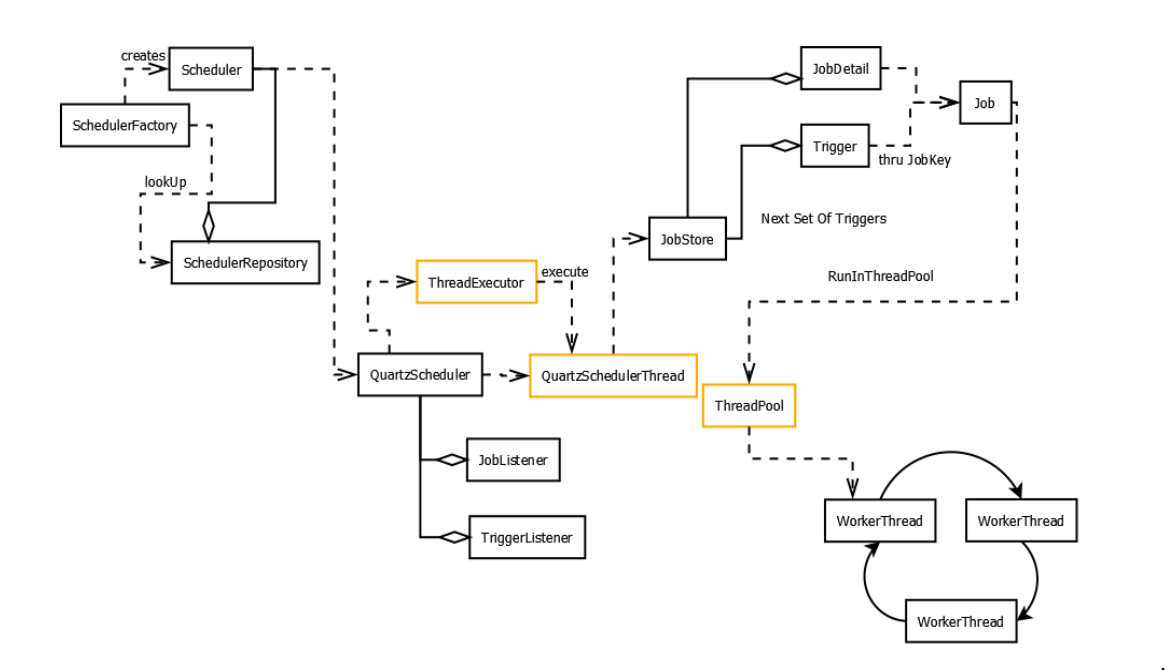
执行的关键代码跟进
example代码入门
quartz的example用例代码, 跟进可以看完所有内部关键逻辑.
    log.info("------- Initializing ----------------------");

    // First we must get a reference to a scheduler
    SchedulerFactory sf = new StdSchedulerFactory();
    Scheduler sched = sf.getScheduler();

    log.info("------- Initialization Complete -----------");

    // computer a time that is on the next round minute
    Date runTime = evenMinuteDate(new Date());

    log.info("------- Scheduling Job  -------------------");

    // define the job and tie it to our HelloJob class
    JobDetail job = newJob(HelloJob.class).withIdentity("job1", "group1").build();

    // Trigger the job to run on the next round minute
    Trigger trigger = newTrigger().withIdentity("trigger1", "group1").startAt(runTime).build();

    // Tell quartz to schedule the job using our trigger
    sched.scheduleJob(job, trigger);
    log.info(job.getKey() + " will run at: " + runTime);

    // Start up the scheduler (nothing can actually run until the
    // scheduler has been started)
    sched.start();
QuartzScheduler保存store和trigger
scheduleJob其实主要保存job和tribber信息, 同时触发线程通知.
sched.scheduleJob(job, trigger);
    /**
     * <p>
     * Add the <code>{@link org.quartz.Job}</code> identified by the given
     * <code>{@link org.quartz.JobDetail}</code> to the Scheduler, and
     * associate the given <code>{@link org.quartz.Trigger}</code> with it.
     * </p>
     *
     * <p>
     * If the given Trigger does not reference any <code>Job</code>, then it
     * will be set to reference the Job passed with it into this method.
     * </p>
     *
     * @throws SchedulerException
     *           if the Job or Trigger cannot be added to the Scheduler, or
     *           there is an internal Scheduler error.
     */
    public Date scheduleJob(JobDetail jobDetail,
            Trigger trigger) throws SchedulerException {
        validateState();


        OperableTrigger trig = (OperableTrigger)trigger;

        if (trigger.getJobKey() == null) {
            trig.setJobKey(jobDetail.getKey());
        } else if (!trigger.getJobKey().equals(jobDetail.getKey())) {
            throw new SchedulerException(
                "Trigger does not reference given job!");
        }

        trig.validate();

        Calendar cal = null;
        if (trigger.getCalendarName() != null) {
            cal = resources.getJobStore().retrieveCalendar(trigger.getCalendarName());
        }
        Date ft = trig.computeFirstFireTime(cal);

        if (ft == null) {
            throw new SchedulerException(
                    "Based on configured schedule, the given trigger '" + trigger.getKey() + "' will never fire.");
        }

        resources.getJobStore().storeJobAndTrigger(jobDetail, trig);
        notifySchedulerListenersJobAdded(jobDetail);
        notifySchedulerThread(trigger.getNextFireTime().getTime());
        notifySchedulerListenersSchduled(trigger);

        return ft;
    }
- jdbc保存job和trigger
    /**
     * <p>
     * Store the given <code>{@link org.quartz.JobDetail}</code> and <code>{@link org.quartz.Trigger}</code>.
     * </p>
     *
     * @param newJob
     *          The <code>JobDetail</code> to be stored.
     * @param newTrigger
     *          The <code>Trigger</code> to be stored.
     * @throws ObjectAlreadyExistsException
     *           if a <code>Job</code> with the same name/group already
     *           exists.
     */
    public void storeJobAndTrigger(final JobDetail newJob,
            final OperableTrigger newTrigger)
        throws JobPersistenceException {
        executeInLock(
            (isLockOnInsert()) ? LOCK_TRIGGER_ACCESS : null,
            new VoidTransactionCallback() {
                public void executeVoid(Connection conn) throws JobPersistenceException {
                    storeJob(conn, newJob, false);
                    storeTrigger(conn, newTrigger, newJob, false,
                            Constants.STATE_WAITING, false, false);
                }
            });
    }
- ram保存job和trigger
    /**
     * <p>
     * Store the given <code>{@link org.quartz.JobDetail}</code> and <code>{@link org.quartz.Trigger}</code>.
     * </p>
     *
     * @param newJob
     *          The <code>JobDetail</code> to be stored.
     * @param newTrigger
     *          The <code>Trigger</code> to be stored.
     * @throws ObjectAlreadyExistsException
     *           if a <code>Job</code> with the same name/group already
     *           exists.
     */
    public void storeJobAndTrigger(JobDetail newJob,
            OperableTrigger newTrigger) throws JobPersistenceException {
        storeJob(newJob, false);
        storeTrigger(newTrigger, false);
    }


        public void storeJob(JobDetail newJob,
            boolean replaceExisting) throws ObjectAlreadyExistsException {
        JobWrapper jw = new JobWrapper((JobDetail)newJob.clone());

        boolean repl = false;

        synchronized (lock) {
            if (jobsByKey.get(jw.key) != null) {
                if (!replaceExisting) {
                    throw new ObjectAlreadyExistsException(newJob);
                }
                repl = true;
            }

            if (!repl) {
                // get job group
                HashMap<JobKey, JobWrapper> grpMap = jobsByGroup.get(newJob.getKey().getGroup());
                if (grpMap == null) {
                    grpMap = new HashMap<JobKey, JobWrapper>(100);
                    jobsByGroup.put(newJob.getKey().getGroup(), grpMap);
                }
                // add to jobs by group
                grpMap.put(newJob.getKey(), jw);
                // add to jobs by FQN map
                jobsByKey.put(jw.key, jw);
            } else {
                // update job detail
                JobWrapper orig = jobsByKey.get(jw.key);
                orig.jobDetail = jw.jobDetail; // already cloned
            }
        }
    }

        public void storeTrigger(OperableTrigger newTrigger,
            boolean replaceExisting) throws JobPersistenceException {
        TriggerWrapper tw = new TriggerWrapper((OperableTrigger)newTrigger.clone());

        synchronized (lock) {
            if (triggersByKey.get(tw.key) != null) {
                if (!replaceExisting) {
                    throw new ObjectAlreadyExistsException(newTrigger);
                }

                removeTrigger(newTrigger.getKey(), false);
            }

            if (retrieveJob(newTrigger.getJobKey()) == null) {
                throw new JobPersistenceException("The job ("
                        + newTrigger.getJobKey()
                        + ") referenced by the trigger does not exist.");
            }

            // add to triggers by job
            List<TriggerWrapper> jobList = triggersByJob.get(tw.jobKey);
            if(jobList == null) {
                jobList = new ArrayList<TriggerWrapper>(1);
                triggersByJob.put(tw.jobKey, jobList);
            }
            jobList.add(tw);

            // add to triggers by group
            HashMap<TriggerKey, TriggerWrapper> grpMap = triggersByGroup.get(newTrigger.getKey().getGroup());
            if (grpMap == null) {
                grpMap = new HashMap<TriggerKey, TriggerWrapper>(100);
                triggersByGroup.put(newTrigger.getKey().getGroup(), grpMap);
            }
            grpMap.put(newTrigger.getKey(), tw);
            // add to triggers by FQN map
            triggersByKey.put(tw.key, tw);

            if (pausedTriggerGroups.contains(newTrigger.getKey().getGroup())
                    || pausedJobGroups.contains(newTrigger.getJobKey().getGroup())) {
                tw.state = TriggerWrapper.STATE_PAUSED;
                if (blockedJobs.contains(tw.jobKey)) {
                    tw.state = TriggerWrapper.STATE_PAUSED_BLOCKED;
                }
            } else if (blockedJobs.contains(tw.jobKey)) {
                tw.state = TriggerWrapper.STATE_BLOCKED;
            } else {
                timeTriggers.add(tw);
            }
        }
    }
- notifySchedulerThread通知QuartzSchedulerThread开始启动调度
    protected void notifySchedulerThread(long candidateNewNextFireTime) {
        if (isSignalOnSchedulingChange()) {
            signaler.signalSchedulingChange(candidateNewNextFireTime);
        }
    }
    public void signalSchedulingChange(long candidateNewNextFireTime) {
        schedThread.signalSchedulingChange(candidateNewNextFireTime);
    }
public class QuartzSchedulerThread extends Thread {
    ...
    /**
     * <p>
     * Signals the main processing loop that a change in scheduling has been
     * made - in order to interrupt any sleeping that may be occuring while
     * waiting for the fire time to arrive.
     * </p>
     *
     * @param candidateNewNextFireTime the time (in millis) when the newly scheduled trigger
     * will fire.  If this method is being called do to some other even (rather
     * than scheduling a trigger), the caller should pass zero (0).
     */
    public void signalSchedulingChange(long candidateNewNextFireTime) {
        synchronized(sigLock) {
            signaled = true;
            signaledNextFireTime = candidateNewNextFireTime;
            sigLock.notifyAll();
        }
    }
}
QuartzSchedulerThread 获取即将执行的调度trigger
这个线程只有一个, 就是用于从后台ram/jdbc存储里获取即将运行的调度任务 latest trigger.
/**
* <p>
* The thread responsible for performing the work of firing <code>{@link Trigger}</code>
* s that are registered with the <code>{@link QuartzScheduler}</code>.
* </p>
*
* @see QuartzScheduler
* @see org.quartz.Job
* @see Trigger
*
* @author James House
*/
public class QuartzSchedulerThread extends Thread {
...
/**
* <p>
* Signals the main processing loop to pause at the next possible point.
* </p>
*/
void togglePause(boolean pause) {
synchronized (sigLock) {
paused = pause;
if (paused) {
signalSchedulingChange(0);
} else {
sigLock.notifyAll();
}
}
}
/**
* <p>
* Signals the main processing loop to pause at the next possible point.
* </p>
*/
void halt(boolean wait) {
synchronized (sigLock) {
halted.set(true);
if (paused) {
sigLock.notifyAll();
} else {
signalSchedulingChange(0);
}
}
this.interrupt();
if (wait) {
boolean interrupted = false;
try {
while (true) {
try {
join();
break;
} catch (InterruptedException e) {
interrupted = true;
}
}
} finally {
if (interrupted) {
Thread.currentThread().interrupt();
}
}
}
}
boolean isPaused() {
return paused;
}
/**
* <p>
* Signals the main processing loop that a change in scheduling has been
* made - in order to interrupt any sleeping that may be occuring while
* waiting for the fire time to arrive.
* </p>
*
* @param candidateNewNextFireTime the time (in millis) when the newly scheduled trigger
* will fire. If this method is being called do to some other even (rather
* than scheduling a trigger), the caller should pass zero (0).
*/
public void signalSchedulingChange(long candidateNewNextFireTime) {
synchronized(sigLock) {
signaled = true;
signaledNextFireTime = candidateNewNextFireTime;
sigLock.notifyAll();
}
}
public void clearSignaledSchedulingChange() {
synchronized(sigLock) {
signaled = false;
signaledNextFireTime = 0;
}
}
public boolean isScheduleChanged() {
synchronized(sigLock) {
return signaled;
}
}
public long getSignaledNextFireTime() {
synchronized(sigLock) {
return signaledNextFireTime;
}
}
/**
* <p>
* The main processing loop of the <code>QuartzSchedulerThread</code>.
* </p>
*/
@Override
public void run() {
int acquiresFailed = 0;
while (!halted.get()) {
try {
// check if we're supposed to pause...
synchronized (sigLock) {
while (paused && !halted.get()) {
try {
// wait until togglePause(false) is called...
sigLock.wait(1000L);
} catch (InterruptedException ignore) {
}
// reset failure counter when paused, so that we don't
// wait again after unpausing
acquiresFailed = 0;
}
if (halted.get()) {
break;
}
}
// wait a bit, if reading from job store is consistently
// failing (e.g. DB is down or restarting)..
if (acquiresFailed > 1) {
try {
long delay = computeDelayForRepeatedErrors(qsRsrcs.getJobStore(), acquiresFailed);
Thread.sleep(delay);
} catch (Exception ignore) {
}
}
int availThreadCount = qsRsrcs.getThreadPool().blockForAvailableThreads();
synchronized (sigLock) {
if (halted.get()) {
break;
}
}
if(availThreadCount > 0) { // will always be true, due to semantics of blockForAvailableThreads...
List<OperableTrigger> triggers;
long now = System.currentTimeMillis();
clearSignaledSchedulingChange();
try {
triggers = qsRsrcs.getJobStore().acquireNextTriggers(
now + idleWaitTime, Math.min(availThreadCount, qsRsrcs.getMaxBatchSize()), qsRsrcs.getBatchTimeWindow());
acquiresFailed = 0;
if (log.isDebugEnabled())
log.debug("batch acquisition of " + (triggers == null ? 0 : triggers.size()) + " triggers");
} catch (JobPersistenceException jpe) {
if (acquiresFailed == 0) {
qs.notifySchedulerListenersError(
"An error occurred while scanning for the next triggers to fire.",
jpe);
}
if (acquiresFailed < Integer.MAX_VALUE)
acquiresFailed++;
continue;
} catch (RuntimeException e) {
if (acquiresFailed == 0) {
getLog().error("quartzSchedulerThreadLoop: RuntimeException "
+e.getMessage(), e);
}
if (acquiresFailed < Integer.MAX_VALUE)
acquiresFailed++;
continue;
}
if (triggers != null && !triggers.isEmpty()) {
now = System.currentTimeMillis();
long triggerTime = triggers.get(0).getNextFireTime().getTime();
long timeUntilTrigger = triggerTime - now;
while(timeUntilTrigger > 2) {
synchronized (sigLock) {
if (halted.get()) {
break;
}
if (!isCandidateNewTimeEarlierWithinReason(triggerTime, false)) {
try {
// we could have blocked a long while
// on 'synchronize', so we must recompute
now = System.currentTimeMillis();
timeUntilTrigger = triggerTime - now;
if(timeUntilTrigger >= 1)
sigLock.wait(timeUntilTrigger);
} catch (InterruptedException ignore) {
}
}
}
synchronized (sigLock) {
if (halted.get()) {
break;
}
}
if(releaseIfScheduleChangedSignificantly(triggers, triggerTime)) {
break;
}
now = System.currentTimeMillis();
timeUntilTrigger = triggerTime - now;
}
// this happens if releaseIfScheduleChangedSignificantly decided to release triggers
if(triggers.isEmpty())
continue;
// set triggers to 'executing'
List<TriggerFiredResult> bndles = new ArrayList<TriggerFiredResult>();
boolean goAhead = true;
synchronized(sigLock) {
goAhead = !halted.get();
}
if(goAhead) {
try {
List<TriggerFiredResult> res = qsRsrcs.getJobStore().triggersFired(triggers);
if(res != null)
bndles = res;
} catch (SchedulerException se) {
qs.notifySchedulerListenersError(
"An error occurred while firing triggers '"
+ triggers + "'", se);
//QTZ-179 : a problem occurred interacting with the triggers from the db
//we release them and loop again
for (int i = 0; i < triggers.size(); i++) {
qsRsrcs.getJobStore().releaseAcquiredTrigger(triggers.get(i));
}
continue;
}
}
for (int i = 0; i < bndles.size(); i++) {
TriggerFiredResult result = bndles.get(i);
TriggerFiredBundle bndle = result.getTriggerFiredBundle();
Exception exception = result.getException();
if (exception instanceof RuntimeException) {
getLog().error("RuntimeException while firing trigger " + triggers.get(i), exception);
qsRsrcs.getJobStore().releaseAcquiredTrigger(triggers.get(i));
continue;
}
// it's possible to get 'null' if the triggers was paused,
// blocked, or other similar occurrences that prevent it being
// fired at this time... or if the scheduler was shutdown (halted)
if (bndle == null) {
qsRsrcs.getJobStore().releaseAcquiredTrigger(triggers.get(i));
continue;
}
JobRunShell shell = null;
try {
shell = qsRsrcs.getJobRunShellFactory().createJobRunShell(bndle);
shell.initialize(qs);
} catch (SchedulerException se) {
qsRsrcs.getJobStore().triggeredJobComplete(triggers.get(i), bndle.getJobDetail(), CompletedExecutionInstruction.SET_ALL_JOB_TRIGGERS_ERROR);
continue;
}
if (qsRsrcs.getThreadPool().runInThread(shell) == false) {
// this case should never happen, as it is indicative of the
// scheduler being shutdown or a bug in the thread pool or
// a thread pool being used concurrently - which the docs
// say not to do...
getLog().error("ThreadPool.runInThread() return false!");
qsRsrcs.getJobStore().triggeredJobComplete(triggers.get(i), bndle.getJobDetail(), CompletedExecutionInstruction.SET_ALL_JOB_TRIGGERS_ERROR);
}
}
continue; // while (!halted)
}
} else { // if(availThreadCount > 0)
// should never happen, if threadPool.blockForAvailableThreads() follows contract
continue; // while (!halted)
}
long now = System.currentTimeMillis();
long waitTime = now + getRandomizedIdleWaitTime();
long timeUntilContinue = waitTime - now;
synchronized(sigLock) {
try {
if(!halted.get()) {
// QTZ-336 A job might have been completed in the mean time and we might have
// missed the scheduled changed signal by not waiting for the notify() yet
// Check that before waiting for too long in case this very job needs to be
// scheduled very soon
if (!isScheduleChanged()) {
sigLock.wait(timeUntilContinue);
}
}
} catch (InterruptedException ignore) {
}
}
} catch(RuntimeException re) {
getLog().error("Runtime error occurred in main trigger firing loop.", re);
}
} // while (!halted)
// drop references to scheduler stuff to aid garbage collection...
qs = null;
qsRsrcs = null;
}
核心代码是这段, 获取即将运行的trigger数据
triggers = qsRsrcs.getJobStore().acquireNextTriggers(
        now + idleWaitTime, Math.min(availThreadCount, qsRsrcs.getMaxBatchSize()), qsRsrcs.getBatchTimeWindow());
RAMJobStore获取acquireNextTriggers
ram store获取acquireNextTriggers的实现
/**
 * <p>
 * This class implements a <code>{@link org.quartz.spi.JobStore}</code> that
 * utilizes RAM as its storage device.
 * </p>
 *
 * <p>
 * As you should know, the ramification of this is that access is extrememly
 * fast, but the data is completely volatile - therefore this <code>JobStore</code>
 * should not be used if true persistence between program shutdowns is
 * required.
 * </p>
 *
 * @author James House
 * @author Sharada Jambula
 * @author Eric Mueller
 */
public class RAMJobStore implements JobStore {
    ...
    /**
     * <p>
     * Get a handle to the next trigger to be fired, and mark it as 'reserved'
     * by the calling scheduler.
     * </p>
     *
     * @see #releaseAcquiredTrigger(OperableTrigger)
     */
    public List<OperableTrigger> acquireNextTriggers(long noLaterThan, int maxCount, long timeWindow) {
        synchronized (lock) {
            List<OperableTrigger> result = new ArrayList<OperableTrigger>();
            Set<JobKey> acquiredJobKeysForNoConcurrentExec = new HashSet<JobKey>();
            Set<TriggerWrapper> excludedTriggers = new HashSet<TriggerWrapper>();
            long batchEnd = noLaterThan;

            // return empty list if store has no triggers.
            if (timeTriggers.size() == 0)
                return result;

            while (true) {
                TriggerWrapper tw;

                try {
                    tw = timeTriggers.first();
                    if (tw == null)
                        break;
                    timeTriggers.remove(tw);
                } catch (java.util.NoSuchElementException nsee) {
                    break;
                }

                if (tw.trigger.getNextFireTime() == null) {
                    continue;
                }

                if (applyMisfire(tw)) {
                    if (tw.trigger.getNextFireTime() != null) {
                        timeTriggers.add(tw);
                    }
                    continue;
                }

                if (tw.getTrigger().getNextFireTime().getTime() > batchEnd) {
                    timeTriggers.add(tw);
                    break;
                }

                // If trigger's job is set as @DisallowConcurrentExecution, and it has already been added to result, then
                // put it back into the timeTriggers set and continue to search for next trigger.
                JobKey jobKey = tw.trigger.getJobKey();
                JobDetail job = jobsByKey.get(tw.trigger.getJobKey()).jobDetail;
                if (job.isConcurrentExectionDisallowed()) {
                    if (acquiredJobKeysForNoConcurrentExec.contains(jobKey)) {
                        excludedTriggers.add(tw);
                        continue; // go to next trigger in store.
                    } else {
                        acquiredJobKeysForNoConcurrentExec.add(jobKey);
                    }
                }

                tw.state = TriggerWrapper.STATE_ACQUIRED;
                tw.trigger.setFireInstanceId(getFiredTriggerRecordId());
                OperableTrigger trig = (OperableTrigger) tw.trigger.clone();
                if (result.isEmpty()) {
                    batchEnd = Math.max(tw.trigger.getNextFireTime().getTime(), System.currentTimeMillis()) + timeWindow;
                }
                result.add(trig);
                if (result.size() == maxCount)
                    break;
            }

            // If we did excluded triggers to prevent ACQUIRE state due to DisallowConcurrentExecution, we need to add them back to store.
            if (excludedTriggers.size() > 0)
                timeTriggers.addAll(excludedTriggers);
            return result;
        }
    }
JobStoreSupport获取acquireNextTriggers
jdbc store获取acquireNextTriggers的实现
/**
 * <p>
 * Contains base functionality for JDBC-based JobStore implementations.
 * </p>
 *
 * @author <a href="mailto:jeff@binaryfeed.org">Jeffrey Wescott</a>
 * @author James House
 */
public abstract class JobStoreSupport implements JobStore, Constants {
    ...
    /**
     * <p>
     * Get a handle to the next N triggers to be fired, and mark them as 'reserved'
     * by the calling scheduler.
     * </p>
     *
     * @see #releaseAcquiredTrigger(OperableTrigger)
     */
    @SuppressWarnings("unchecked")
    public List<OperableTrigger> acquireNextTriggers(final long noLaterThan, final int maxCount, final long timeWindow)
        throws JobPersistenceException {

        String lockName;
        if(isAcquireTriggersWithinLock() || maxCount > 1) {
            lockName = LOCK_TRIGGER_ACCESS;
        } else {
            lockName = null;
        }
        return executeInNonManagedTXLock(lockName,
                new TransactionCallback<List<OperableTrigger>>() {
                    public List<OperableTrigger> execute(Connection conn) throws JobPersistenceException {
                        return acquireNextTrigger(conn, noLaterThan, maxCount, timeWindow);
                    }
                },
                new TransactionValidator<List<OperableTrigger>>() {
                    public Boolean validate(Connection conn, List<OperableTrigger> result) throws JobPersistenceException {
                        try {
                            List<FiredTriggerRecord> acquired = getDelegate().selectInstancesFiredTriggerRecords(conn, getInstanceId());
                            Set<String> fireInstanceIds = new HashSet<String>();
                            for (FiredTriggerRecord ft : acquired) {
                                fireInstanceIds.add(ft.getFireInstanceId());
                            }
                            for (OperableTrigger tr : result) {
                                if (fireInstanceIds.contains(tr.getFireInstanceId())) {
                                    return true;
                                }
                            }
                            return false;
                        } catch (SQLException e) {
                            throw new JobPersistenceException("error validating trigger acquisition", e);
                        }
                    }
                });
    }
QuartzSchedulerThread中分发任务
QuartzSchedulerThread中任务分发到worker threadpool是这段
JobRunShell shell = null;
try {
    shell = qsRsrcs.getJobRunShellFactory().createJobRunShell(bndle);
    shell.initialize(qs);
} catch (SchedulerException se) {
    qsRsrcs.getJobStore().triggeredJobComplete(triggers.get(i), bndle.getJobDetail(), CompletedExecutionInstruction.SET_ALL_JOB_TRIGGERS_ERROR);
    continue;
}

if (qsRsrcs.getThreadPool().runInThread(shell) == false) {
    // this case should never happen, as it is indicative of the
    // scheduler being shutdown or a bug in the thread pool or
    // a thread pool being used concurrently - which the docs
    // say not to do...
    getLog().error("ThreadPool.runInThread() return false!");
    qsRsrcs.getJobStore().triggeredJobComplete(triggers.get(i), bndle.getJobDetail(), CompletedExecutionInstruction.SET_ALL_JOB_TRIGGERS_ERROR);
}
JobRunShell提供了任务执行上下文环境
/**
 * <p>
 * JobRunShell instances are responsible for providing the 'safe' environment
 * for <code>Job</code> s to run in, and for performing all of the work of
 * executing the <code>Job</code>, catching ANY thrown exceptions, updating
 * the <code>Trigger</code> with the <code>Job</code>'s completion code,
 * etc.
 * </p>
 *
 * <p>
 * A <code>JobRunShell</code> instance is created by a <code>JobRunShellFactory</code>
 * on behalf of the <code>QuartzSchedulerThread</code> which then runs the
 * shell in a thread from the configured <code>ThreadPool</code> when the
 * scheduler determines that a <code>Job</code> has been triggered.
 * </p>
 */
public class JobRunShell extends SchedulerListenerSupport implements Runnable {
   ...
    public void initialize(QuartzScheduler sched)
        throws SchedulerException {
        this.qs = sched;

        Job job = null;
        JobDetail jobDetail = firedTriggerBundle.getJobDetail();

        try {
            job = sched.getJobFactory().newJob(firedTriggerBundle, scheduler);
        } catch (SchedulerException se) {
            sched.notifySchedulerListenersError(
                    "An error occured instantiating job to be executed. job= '"
                            + jobDetail.getKey() + "'", se);
            throw se;
        } catch (Throwable ncdfe) { // such as NoClassDefFoundError
            SchedulerException se = new SchedulerException(
                    "Problem instantiating class '"
                            + jobDetail.getJobClass().getName() + "' - ", ncdfe);
            sched.notifySchedulerListenersError(
                    "An error occured instantiating job to be executed. job= '"
                            + jobDetail.getKey() + "'", se);
            throw se;
        }

        this.jec = new JobExecutionContextImpl(scheduler, firedTriggerBundle, job);
    }
SimpleThreadPool执行shell任务
其中 qsRsrcs.getThreadPool().runInThread(shell)在线程池里执行
/**
 * <p>
 * This is class is a simple implementation of a thread pool, based on the
 * <code>{@link org.quartz.spi.ThreadPool}</code> interface.
 * </p>
 *
 * <p>
 * <CODE>Runnable</CODE> objects are sent to the pool with the <code>{@link #runInThread(Runnable)}</code>
 * method, which blocks until a <code>Thread</code> becomes available.
 * </p>
 *
 * <p>
 * The pool has a fixed number of <code>Thread</code>s, and does not grow or
 * shrink based on demand.
 * </p>
 *
 * @author James House
 * @author Juergen Donnerstag
 */
public class SimpleThreadPool implements ThreadPool {
    ...
    /**
     * <p>
     * Run the given <code>Runnable</code> object in the next available
     * <code>Thread</code>. If while waiting the thread pool is asked to
     * shut down, the Runnable is executed immediately within a new additional
     * thread.
     * </p>
     *
     * @param runnable
     *          the <code>Runnable</code> to be added.
     */
    public boolean runInThread(Runnable runnable) {
        if (runnable == null) {
            return false;
        }

        synchronized (nextRunnableLock) {

            handoffPending = true;

            // Wait until a worker thread is available
            while ((availWorkers.size() < 1) && !isShutdown) {
                try {
                    nextRunnableLock.wait(500);
                } catch (InterruptedException ignore) {
                }
            }

            if (!isShutdown) {
                WorkerThread wt = (WorkerThread)availWorkers.removeFirst();
                busyWorkers.add(wt);
                wt.run(runnable);
            } else {
                // If the thread pool is going down, execute the Runnable
                // within a new additional worker thread (no thread from the pool).
                WorkerThread wt = new WorkerThread(this, threadGroup,
                        "WorkerThread-LastJob", prio, isMakeThreadsDaemons(), runnable);
                busyWorkers.add(wt);
                workers.add(wt);
                wt.start();
            }
            nextRunnableLock.notifyAll();
            handoffPending = false;
        }

        return true;
    }
JobRunShell中的run执行
worker threadpool的thread执行的是提交的runnable的run方法, 也就是jobrunshell里的这段
    public void run() {
        qs.addInternalSchedulerListener(this);

        try {
            OperableTrigger trigger = (OperableTrigger) jec.getTrigger();
            JobDetail jobDetail = jec.getJobDetail();

            do {

                JobExecutionException jobExEx = null;
                Job job = jec.getJobInstance();

                try {
                    begin();
                } catch (SchedulerException se) {
                    qs.notifySchedulerListenersError("Error executing Job ("
                            + jec.getJobDetail().getKey()
                            + ": couldn't begin execution.", se);
                    break;
                }

                // notify job & trigger listeners...
                try {
                    if (!notifyListenersBeginning(jec)) {
                        break;
                    }
                } catch(VetoedException ve) {
                    try {
                        CompletedExecutionInstruction instCode = trigger.executionComplete(jec, null);
                        qs.notifyJobStoreJobVetoed(trigger, jobDetail, instCode);

                        // QTZ-205
                        // Even if trigger got vetoed, we still needs to check to see if it's the trigger's finalized run or not.
                        if (jec.getTrigger().getNextFireTime() == null) {
                            qs.notifySchedulerListenersFinalized(jec.getTrigger());
                        }

                        complete(true);
                    } catch (SchedulerException se) {
                        qs.notifySchedulerListenersError("Error during veto of Job ("
                                + jec.getJobDetail().getKey()
                                + ": couldn't finalize execution.", se);
                    }
                    break;
                }

                long startTime = System.currentTimeMillis();
                long endTime = startTime;

                // execute the job
                try {
                    log.debug("Calling execute on job " + jobDetail.getKey());
                    job.execute(jec);
                    endTime = System.currentTimeMillis();
                } catch (JobExecutionException jee) {
                    endTime = System.currentTimeMillis();
                    jobExEx = jee;
                    getLog().info("Job " + jobDetail.getKey() +
                            " threw a JobExecutionException: ", jobExEx);
                } catch (Throwable e) {
                    endTime = System.currentTimeMillis();
                    getLog().error("Job " + jobDetail.getKey() +
                            " threw an unhandled Exception: ", e);
                    SchedulerException se = new SchedulerException(
                            "Job threw an unhandled exception.", e);
                    qs.notifySchedulerListenersError("Job ("
                            + jec.getJobDetail().getKey()
                            + " threw an exception.", se);
                    jobExEx = new JobExecutionException(se, false);
                }

                jec.setJobRunTime(endTime - startTime);

                // notify all job listeners
                if (!notifyJobListenersComplete(jec, jobExEx)) {
                    break;
                }

                CompletedExecutionInstruction instCode = CompletedExecutionInstruction.NOOP;

                // update the trigger
                try {
                    instCode = trigger.executionComplete(jec, jobExEx);
                } catch (Exception e) {
                    // If this happens, there's a bug in the trigger...
                    SchedulerException se = new SchedulerException(
                            "Trigger threw an unhandled exception.", e);
                    qs.notifySchedulerListenersError(
                            "Please report this error to the Quartz developers.",
                            se);
                }

                // notify all trigger listeners
                if (!notifyTriggerListenersComplete(jec, instCode)) {
                    break;
                }

                // update job/trigger or re-execute job
                if (instCode == CompletedExecutionInstruction.RE_EXECUTE_JOB) {
                    jec.incrementRefireCount();
                    try {
                        complete(false);
                    } catch (SchedulerException se) {
                        qs.notifySchedulerListenersError("Error executing Job ("
                                + jec.getJobDetail().getKey()
                                + ": couldn't finalize execution.", se);
                    }
                    continue;
                }

                try {
                    complete(true);
                } catch (SchedulerException se) {
                    qs.notifySchedulerListenersError("Error executing Job ("
                            + jec.getJobDetail().getKey()
                            + ": couldn't finalize execution.", se);
                    continue;
                }

                qs.notifyJobStoreJobComplete(trigger, jobDetail, instCode);
                break;
            } while (true);

        } finally {
            qs.removeInternalSchedulerListener(this);
        }
    }
用户job定义中的具体逻辑执行
可以看到具体的执行在这里
job.execute(jec);
这个job.execute其实就是用户侧定义job的时候, 需要写入的参数. 对比example中的job定义, 就会发现原来最终是在这里运行.
demo代码入门
example
quartz example 1
- simpleExample.java
package org.quartz.examples.example1;

import static org.quartz.DateBuilder.evenMinuteDate;
import static org.quartz.JobBuilder.newJob;
import static org.quartz.TriggerBuilder.newTrigger;

import org.quartz.JobDetail;
import org.quartz.Scheduler;
import org.quartz.SchedulerFactory;
import org.quartz.Trigger;
import org.quartz.impl.StdSchedulerFactory;
import org.slf4j.Logger;
import org.slf4j.LoggerFactory;

import java.util.Date;

/**
 * This Example will demonstrate how to start and shutdown the Quartz scheduler and how to schedule a job to run in
 * Quartz.
 *
 * @author Bill Kratzer
 */
public class SimpleExample {

  public void run() throws Exception {
    Logger log = LoggerFactory.getLogger(SimpleExample.class);

    log.info("------- Initializing ----------------------");

    // First we must get a reference to a scheduler
    SchedulerFactory sf = new StdSchedulerFactory();
    Scheduler sched = sf.getScheduler();

    log.info("------- Initialization Complete -----------");

    // computer a time that is on the next round minute
    Date runTime = evenMinuteDate(new Date());

    log.info("------- Scheduling Job  -------------------");

    // define the job and tie it to our HelloJob class
    JobDetail job = newJob(HelloJob.class).withIdentity("job1", "group1").build();

    // Trigger the job to run on the next round minute
    Trigger trigger = newTrigger().withIdentity("trigger1", "group1").startAt(runTime).build();

    // Tell quartz to schedule the job using our trigger
    sched.scheduleJob(job, trigger);
    log.info(job.getKey() + " will run at: " + runTime);

    // Start up the scheduler (nothing can actually run until the
    // scheduler has been started)
    sched.start();

    log.info("------- Started Scheduler -----------------");

    // wait long enough so that the scheduler as an opportunity to
    // run the job!
    log.info("------- Waiting 65 seconds... -------------");
    try {
      // wait 65 seconds to show job
      Thread.sleep(65L * 1000L);
      // executing...
    } catch (Exception e) {
      //
    }

    // shut down the scheduler
    log.info("------- Shutting Down ---------------------");
    sched.shutdown(true);
    log.info("------- Shutdown Complete -----------------");
  }

  public static void main(String[] args) throws Exception {

    SimpleExample example = new SimpleExample();
    example.run();

  }

}


- helloJob.java
/*
 * All content copyright Terracotta, Inc., unless otherwise indicated. All rights reserved.
 *
 * Licensed under the Apache License, Version 2.0 (the "License"); you may not
 * use this file except in compliance with the License. You may obtain a copy
 * of the License at
 *
 *   http://www.apache.org/licenses/LICENSE-2.0
 *
 * Unless required by applicable law or agreed to in writing, software
 * distributed under the License is distributed on an "AS IS" BASIS, WITHOUT
 * WARRANTIES OR CONDITIONS OF ANY KIND, either express or implied. See the
 * License for the specific language governing permissions and limitations
 * under the License.
 *
 */

package org.quartz.examples.example1;

import java.util.Date;

import org.slf4j.Logger;
import org.slf4j.LoggerFactory;
import org.quartz.Job;
import org.quartz.JobExecutionContext;
import org.quartz.JobExecutionException;

/**
 * <p>
 * This is just a simple job that says "Hello" to the world.
 * </p>
 *
 * @author Bill Kratzer
 */
public class HelloJob implements Job {

    private static Logger _log = LoggerFactory.getLogger(HelloJob.class);

    /**
     * <p>
     * Empty constructor for job initilization
     * </p>
     * <p>
     * Quartz requires a public empty constructor so that the
     * scheduler can instantiate the class whenever it needs.
     * </p>
     */
    public HelloJob() {
    }

    /**
     * <p>
     * Called by the <code>{@link org.quartz.Scheduler}</code> when a
     * <code>{@link org.quartz.Trigger}</code> fires that is associated with
     * the <code>Job</code>.
     * </p>
     *
     * @throws JobExecutionException
     *             if there is an exception while executing the job.
     */
    public void execute(JobExecutionContext context)
        throws JobExecutionException {

        // Say Hello to the World and display the date/time
        _log.info("Hello World! - " + new Date());
    }

}
其他例子
https://github.com/ltephanysopez/quartz-job-scheduling
trigger = newTrigger() {
    .withIdentity(“trigger3”, “group1”)
    .withSchedule(cronSchedule(“0 42 10 * * ?”))
    .forJob(myJobKey)
    .build();
}
trigger = newTrigger() {
    .withIdentity(“trigger7”, “group1”)
    .withSchedule(simpleSchedule()
    .withIntervalInMinutes(5)
    .repeatForever())
    .endAt(dateOf(22, 0, 0))
    .build();
}
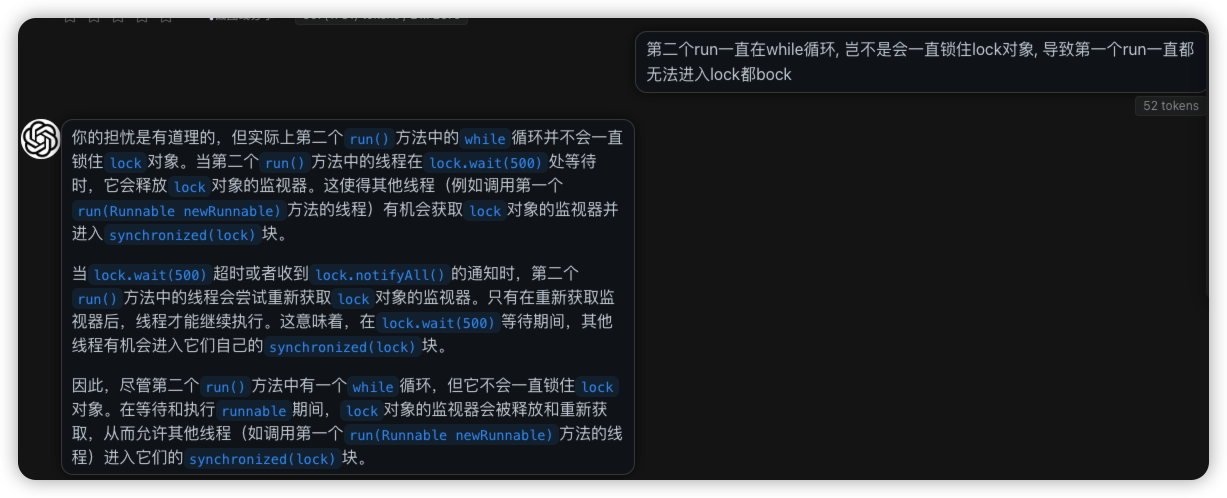
线程锁问题
    class WorkerThread extends Thread {

        private final Object lock = new Object();

        // A flag that signals the WorkerThread to terminate.
        private AtomicBoolean run = new AtomicBoolean(true);

        private SimpleThreadPool tp;

        private Runnable runnable = null;

        public void run(Runnable newRunnable) {
            synchronized(lock) {
                if(runnable != null) {
                    throw new IllegalStateException("Already running a Runnable!");
                }

                runnable = newRunnable;
                lock.notifyAll();
            }
        }

        /**
         * <p>
         * Loop, executing targets as they are received.
         * </p>
         */
        @Override
        public void run() {
            boolean ran = false;

            while (run.get()) {
                try {
                    synchronized(lock) {
                        while (runnable == null && run.get()) {
                            lock.wait(500);
                        }

                        if (runnable != null) {
                            ran = true;
                            runnable.run();
                        }
                    }
                } catch (InterruptedException unblock) {
                    // do nothing (loop will terminate if shutdown() was called
                    try {
                        getLog().error("Worker thread was interrupt()'ed.", unblock);
                    } catch(Exception e) {
                        // ignore to help with a tomcat glitch
                    }
                } catch (Throwable exceptionInRunnable) {
                    try {
                        getLog().error("Error while executing the Runnable: ",
                            exceptionInRunnable);
                    } catch(Exception e) {
                        // ignore to help with a tomcat glitch
                    }
                } finally {
                    synchronized(lock) {
                        runnable = null;
                    }
                    // repair the thread in case the runnable mucked it up...
                    if(getPriority() != tp.getThreadPriority()) {
                        setPriority(tp.getThreadPriority());
                    }

                    if (runOnce) {
                           run.set(false);
                        clearFromBusyWorkersList(this);
                    } else if(ran) {
                        ran = false;
                        makeAvailable(this);
                    }

                }
            }

            //if (log.isDebugEnabled())
            try {
                getLog().debug("WorkerThread is shut down.");
            } catch(Exception e) {
                // ignore to help with a tomcat glitch
            }
        }
chatgpt太强了, 以前这种问题都得摸索很久, 或者咨询同事才能快速得到答案
参考文档
官方文档内容其实比较少, 看不到什么架构类的信息
https://www.quartz-scheduler.org/
https://www.quartz-scheduler.org/documentation/quartz-2.3.0/
- bealdung的quartz入门
Introduction to Quartz
https://www.baeldung.com/quartz
很不错, 看完可以入门.
- bealdung的quartz spring
Scheduling in Spring with Quartz https://www.baeldung.com/spring-quartz-schedule
- github的quartz架构文档
quartz-explained
https://github.com/nkcoder/quartz-explained
https://www.jianshu.com/p/f466e02e2e94
- Quartz源码分析
https://blog.csdn.net/CringKong/article/details/89290582
https://blog.csdn.net/CringKong/article/details/89423021
数据库连接测试
quartz.properties配置
#============================================================================
# Configure Main Scheduler Properties
#============================================================================

org.quartz.scheduler.instanceName: TestScheduler
org.quartz.scheduler.instanceId: instance_two

#============================================================================
# Configure ThreadPool
#============================================================================

org.quartz.threadPool.class: org.quartz.simpl.SimpleThreadPool
org.quartz.threadPool.threadCount: 5
org.quartz.threadPool.threadPriority: 5

#============================================================================
# Configure JobStore
#============================================================================

org.quartz.jobStore.misfireThreshold: 60000

org.quartz.jobStore.class=org.quartz.impl.jdbcjobstore.JobStoreTX
org.quartz.jobStore.driverDelegateClass=org.quartz.impl.jdbcjobstore.StdJDBCDelegate
org.quartz.jobStore.useProperties=false
org.quartz.jobStore.dataSource=myDS
org.quartz.jobStore.tablePrefix=QRTZ_
org.quartz.jobStore.isClustered=true

#============================================================================
# Configure Datasources
#============================================================================

org.quartz.dataSource.myDS.driver: com.mysql.cj.jdbc.Driver
org.quartz.dataSource.myDS.URL: jdbc:mysql://mysql.demo.com:8306/abc
org.quartz.dataSource.myDS.user: user
org.quartz.dataSource.myDS.password: fakePassword
org.quartz.dataSource.myDS.maxConnections: 5
org.quartz.dataSource.myDS.validationQuery: select 0
需要提前完成数据库初始化, 不然报错LOCK表不存在, 初始化sql来自quartz代码.
DROP TABLE IF EXISTS QRTZ_FIRED_TRIGGERS;
DROP TABLE IF EXISTS QRTZ_PAUSED_TRIGGER_GRPS;
DROP TABLE IF EXISTS QRTZ_SCHEDULER_STATE;
DROP TABLE IF EXISTS QRTZ_LOCKS;
DROP TABLE IF EXISTS QRTZ_SIMPLE_TRIGGERS;
DROP TABLE IF EXISTS QRTZ_SIMPROP_TRIGGERS;
DROP TABLE IF EXISTS QRTZ_CRON_TRIGGERS;
DROP TABLE IF EXISTS QRTZ_BLOB_TRIGGERS;
DROP TABLE IF EXISTS QRTZ_TRIGGERS;
DROP TABLE IF EXISTS QRTZ_JOB_DETAILS;
DROP TABLE IF EXISTS QRTZ_CALENDARS;

CREATE TABLE QRTZ_JOB_DETAILS(
SCHED_NAME VARCHAR(120) NOT NULL,
JOB_NAME VARCHAR(190) NOT NULL,
JOB_GROUP VARCHAR(190) NOT NULL,
DESCRIPTION VARCHAR(250) NULL,
JOB_CLASS_NAME VARCHAR(250) NOT NULL,
IS_DURABLE VARCHAR(1) NOT NULL,
IS_NONCONCURRENT VARCHAR(1) NOT NULL,
IS_UPDATE_DATA VARCHAR(1) NOT NULL,
REQUESTS_RECOVERY VARCHAR(1) NOT NULL,
JOB_DATA BLOB NULL,
PRIMARY KEY (SCHED_NAME,JOB_NAME,JOB_GROUP))
ENGINE=InnoDB;

CREATE TABLE QRTZ_TRIGGERS (
SCHED_NAME VARCHAR(120) NOT NULL,
TRIGGER_NAME VARCHAR(190) NOT NULL,
TRIGGER_GROUP VARCHAR(190) NOT NULL,
JOB_NAME VARCHAR(190) NOT NULL,
JOB_GROUP VARCHAR(190) NOT NULL,
DESCRIPTION VARCHAR(250) NULL,
NEXT_FIRE_TIME BIGINT(13) NULL,
PREV_FIRE_TIME BIGINT(13) NULL,
PRIORITY INTEGER NULL,
TRIGGER_STATE VARCHAR(16) NOT NULL,
TRIGGER_TYPE VARCHAR(8) NOT NULL,
START_TIME BIGINT(13) NOT NULL,
END_TIME BIGINT(13) NULL,
CALENDAR_NAME VARCHAR(190) NULL,
MISFIRE_INSTR SMALLINT(2) NULL,
JOB_DATA BLOB NULL,
PRIMARY KEY (SCHED_NAME,TRIGGER_NAME,TRIGGER_GROUP),
FOREIGN KEY (SCHED_NAME,JOB_NAME,JOB_GROUP)
REFERENCES QRTZ_JOB_DETAILS(SCHED_NAME,JOB_NAME,JOB_GROUP))
ENGINE=InnoDB;

CREATE TABLE QRTZ_SIMPLE_TRIGGERS (
SCHED_NAME VARCHAR(120) NOT NULL,
TRIGGER_NAME VARCHAR(190) NOT NULL,
TRIGGER_GROUP VARCHAR(190) NOT NULL,
REPEAT_COUNT BIGINT(7) NOT NULL,
REPEAT_INTERVAL BIGINT(12) NOT NULL,
TIMES_TRIGGERED BIGINT(10) NOT NULL,
PRIMARY KEY (SCHED_NAME,TRIGGER_NAME,TRIGGER_GROUP),
FOREIGN KEY (SCHED_NAME,TRIGGER_NAME,TRIGGER_GROUP)
REFERENCES QRTZ_TRIGGERS(SCHED_NAME,TRIGGER_NAME,TRIGGER_GROUP))
ENGINE=InnoDB;

CREATE TABLE QRTZ_CRON_TRIGGERS (
SCHED_NAME VARCHAR(120) NOT NULL,
TRIGGER_NAME VARCHAR(190) NOT NULL,
TRIGGER_GROUP VARCHAR(190) NOT NULL,
CRON_EXPRESSION VARCHAR(120) NOT NULL,
TIME_ZONE_ID VARCHAR(80),
PRIMARY KEY (SCHED_NAME,TRIGGER_NAME,TRIGGER_GROUP),
FOREIGN KEY (SCHED_NAME,TRIGGER_NAME,TRIGGER_GROUP)
REFERENCES QRTZ_TRIGGERS(SCHED_NAME,TRIGGER_NAME,TRIGGER_GROUP))
ENGINE=InnoDB;

CREATE TABLE QRTZ_SIMPROP_TRIGGERS
  (
    SCHED_NAME VARCHAR(120) NOT NULL,
    TRIGGER_NAME VARCHAR(190) NOT NULL,
    TRIGGER_GROUP VARCHAR(190) NOT NULL,
    STR_PROP_1 VARCHAR(512) NULL,
    STR_PROP_2 VARCHAR(512) NULL,
    STR_PROP_3 VARCHAR(512) NULL,
    INT_PROP_1 INT NULL,
    INT_PROP_2 INT NULL,
    LONG_PROP_1 BIGINT NULL,
    LONG_PROP_2 BIGINT NULL,
    DEC_PROP_1 NUMERIC(13,4) NULL,
    DEC_PROP_2 NUMERIC(13,4) NULL,
    BOOL_PROP_1 VARCHAR(1) NULL,
    BOOL_PROP_2 VARCHAR(1) NULL,
    PRIMARY KEY (SCHED_NAME,TRIGGER_NAME,TRIGGER_GROUP),
    FOREIGN KEY (SCHED_NAME,TRIGGER_NAME,TRIGGER_GROUP)
    REFERENCES QRTZ_TRIGGERS(SCHED_NAME,TRIGGER_NAME,TRIGGER_GROUP))
ENGINE=InnoDB;

CREATE TABLE QRTZ_BLOB_TRIGGERS (
SCHED_NAME VARCHAR(120) NOT NULL,
TRIGGER_NAME VARCHAR(190) NOT NULL,
TRIGGER_GROUP VARCHAR(190) NOT NULL,
BLOB_DATA BLOB NULL,
PRIMARY KEY (SCHED_NAME,TRIGGER_NAME,TRIGGER_GROUP),
INDEX (SCHED_NAME,TRIGGER_NAME, TRIGGER_GROUP),
FOREIGN KEY (SCHED_NAME,TRIGGER_NAME,TRIGGER_GROUP)
REFERENCES QRTZ_TRIGGERS(SCHED_NAME,TRIGGER_NAME,TRIGGER_GROUP))
ENGINE=InnoDB;

CREATE TABLE QRTZ_CALENDARS (
SCHED_NAME VARCHAR(120) NOT NULL,
CALENDAR_NAME VARCHAR(190) NOT NULL,
CALENDAR BLOB NOT NULL,
PRIMARY KEY (SCHED_NAME,CALENDAR_NAME))
ENGINE=InnoDB;

CREATE TABLE QRTZ_PAUSED_TRIGGER_GRPS (
SCHED_NAME VARCHAR(120) NOT NULL,
TRIGGER_GROUP VARCHAR(190) NOT NULL,
PRIMARY KEY (SCHED_NAME,TRIGGER_GROUP))
ENGINE=InnoDB;

CREATE TABLE QRTZ_FIRED_TRIGGERS (
SCHED_NAME VARCHAR(120) NOT NULL,
ENTRY_ID VARCHAR(95) NOT NULL,
TRIGGER_NAME VARCHAR(190) NOT NULL,
TRIGGER_GROUP VARCHAR(190) NOT NULL,
INSTANCE_NAME VARCHAR(190) NOT NULL,
FIRED_TIME BIGINT(13) NOT NULL,
SCHED_TIME BIGINT(13) NOT NULL,
PRIORITY INTEGER NOT NULL,
STATE VARCHAR(16) NOT NULL,
JOB_NAME VARCHAR(190) NULL,
JOB_GROUP VARCHAR(190) NULL,
IS_NONCONCURRENT VARCHAR(1) NULL,
REQUESTS_RECOVERY VARCHAR(1) NULL,
PRIMARY KEY (SCHED_NAME,ENTRY_ID))
ENGINE=InnoDB;

CREATE TABLE QRTZ_SCHEDULER_STATE (
SCHED_NAME VARCHAR(120) NOT NULL,
INSTANCE_NAME VARCHAR(190) NOT NULL,
LAST_CHECKIN_TIME BIGINT(13) NOT NULL,
CHECKIN_INTERVAL BIGINT(13) NOT NULL,
PRIMARY KEY (SCHED_NAME,INSTANCE_NAME))
ENGINE=InnoDB;

CREATE TABLE QRTZ_LOCKS (
SCHED_NAME VARCHAR(120) NOT NULL,
LOCK_NAME VARCHAR(40) NOT NULL,
PRIMARY KEY (SCHED_NAME,LOCK_NAME))
ENGINE=InnoDB;

CREATE INDEX IDX_QRTZ_J_REQ_RECOVERY ON QRTZ_JOB_DETAILS(SCHED_NAME,REQUESTS_RECOVERY);
CREATE INDEX IDX_QRTZ_J_GRP ON QRTZ_JOB_DETAILS(SCHED_NAME,JOB_GROUP);

CREATE INDEX IDX_QRTZ_T_J ON QRTZ_TRIGGERS(SCHED_NAME,JOB_NAME,JOB_GROUP);
CREATE INDEX IDX_QRTZ_T_JG ON QRTZ_TRIGGERS(SCHED_NAME,JOB_GROUP);
CREATE INDEX IDX_QRTZ_T_C ON QRTZ_TRIGGERS(SCHED_NAME,CALENDAR_NAME);
CREATE INDEX IDX_QRTZ_T_G ON QRTZ_TRIGGERS(SCHED_NAME,TRIGGER_GROUP);
CREATE INDEX IDX_QRTZ_T_STATE ON QRTZ_TRIGGERS(SCHED_NAME,TRIGGER_STATE);
CREATE INDEX IDX_QRTZ_T_N_STATE ON QRTZ_TRIGGERS(SCHED_NAME,TRIGGER_NAME,TRIGGER_GROUP,TRIGGER_STATE);
CREATE INDEX IDX_QRTZ_T_N_G_STATE ON QRTZ_TRIGGERS(SCHED_NAME,TRIGGER_GROUP,TRIGGER_STATE);
CREATE INDEX IDX_QRTZ_T_NEXT_FIRE_TIME ON QRTZ_TRIGGERS(SCHED_NAME,NEXT_FIRE_TIME);
CREATE INDEX IDX_QRTZ_T_NFT_ST ON QRTZ_TRIGGERS(SCHED_NAME,TRIGGER_STATE,NEXT_FIRE_TIME);
CREATE INDEX IDX_QRTZ_T_NFT_MISFIRE ON QRTZ_TRIGGERS(SCHED_NAME,MISFIRE_INSTR,NEXT_FIRE_TIME);
CREATE INDEX IDX_QRTZ_T_NFT_ST_MISFIRE ON QRTZ_TRIGGERS(SCHED_NAME,MISFIRE_INSTR,NEXT_FIRE_TIME,TRIGGER_STATE);
CREATE INDEX IDX_QRTZ_T_NFT_ST_MISFIRE_GRP ON QRTZ_TRIGGERS(SCHED_NAME,MISFIRE_INSTR,NEXT_FIRE_TIME,TRIGGER_GROUP,TRIGGER_STATE);

CREATE INDEX IDX_QRTZ_FT_TRIG_INST_NAME ON QRTZ_FIRED_TRIGGERS(SCHED_NAME,INSTANCE_NAME);
CREATE INDEX IDX_QRTZ_FT_INST_JOB_REQ_RCVRY ON QRTZ_FIRED_TRIGGERS(SCHED_NAME,INSTANCE_NAME,REQUESTS_RECOVERY);
CREATE INDEX IDX_QRTZ_FT_J_G ON QRTZ_FIRED_TRIGGERS(SCHED_NAME,JOB_NAME,JOB_GROUP);
CREATE INDEX IDX_QRTZ_FT_JG ON QRTZ_FIRED_TRIGGERS(SCHED_NAME,JOB_GROUP);
CREATE INDEX IDX_QRTZ_FT_T_G ON QRTZ_FIRED_TRIGGERS(SCHED_NAME,TRIGGER_NAME,TRIGGER_GROUP);
CREATE INDEX IDX_QRTZ_FT_TG ON QRTZ_FIRED_TRIGGERS(SCHED_NAME,TRIGGER_GROUP);
运行简单和cron任务, 发现基本上关键信息都在trigger表里.
- 几个trigger都有对应的记录, 每个trigger主要记录启动时间和下次执行时间, 每次执行后自动计算下次执行时间, 这样就实现了长期的调度跟踪. trigger运行完会自动从库表里被清除, 并没有留下记录.
- 如果trigger没有执行完毕, 或是本身是长期的cron任务, quartz进程就关闭, 下次启动的时候会报错trigger和job已经存在, 不能重复添加到scheduler里面.
- simple trigger的任务有repeat count等信息,但是数据库里没有找到该信息, endtime也是0, 不知道quartz是如何确定停止运行的? 在内存的话重启肯定会丢失, 可能在job-detail的job data里面?
- quartz-triggers
SCHED_NAME   |TRIGGER_NAME|TRIGGER_GROUP|JOB_NAME|JOB_GROUP|DESCRIPTION|NEXT_FIRE_TIME|PREV_FIRE_TIME|PRIORITY|TRIGGER_STATE|TRIGGER_TYPE|START_TIME   |END_TIME|CALENDAR_NAME|MISFIRE_INSTR|JOB_DATA|
-------------|------------|-------------|--------|---------|-----------|--------------|--------------|--------|-------------|------------|-------------|--------|-------------|-------------|--------|
TestScheduler|trigger1    |group1       |job1    |group1   |           | 1704356160000|            -1|       5|WAITING      |SIMPLE      |1704356160000|       0|             |            0|        |
TestScheduler|trigger2    |group1       |job2    |group1   |           | 1704355180000| 1704355160000|       5|WAITING      |CRON        |1704354261000|       0|             |            0|        |
TestScheduler|trigger4    |group1       |job4    |group1   |           | 1704355167257| 1704355157257|       5|WAITING      |SIMPLE      |1704354997257|       0|             |            0|        |
- quartz-jobs
SCHED_NAME |JOB_NAME|JOB_GROUP|DESCRIPTION|JOB_CLASS_NAME |IS_DURABLE|IS_NONCONCURRENT|IS_UPDATE_DATA|REQUESTS_RECOVERY|JOB_DATA |
-------------|--------|---------|-----------|--------------------------------------|----------|----------------|--------------|-----------------|---------------------------------------------------------------------------------------------------------------------------------------------------------------------------------------------------------------------------------------------------------------|
TestScheduler|job1 |group1 | |org.quartz.examples.example1.HelloJob |0 |0 |0 |0 |¬í sr org.quartz.JobDataMap ° è¿©°Ë xr &org.quartz.utils.StringKeyDirtyFlagMap èÃûÅ]( Z allowsTransientDataxr org.quartz.utils.DirtyFlagMap æ.(v Î Z dirtyL mapt Ljava/util/Map;xp sr java.util.HashMap ÚÁà `Ñ F loadFactorI thresholdxp?@|
TestScheduler|job2 |group1 | |org.quartz.examples.example3.SimpleJob|0 |0 |0 |0 |¬í sr org.quartz.JobDataMap ° è¿©°Ë xr &org.quartz.utils.StringKeyDirtyFlagMap èÃûÅ]( Z allowsTransientDataxr org.quartz.utils.DirtyFlagMap æ.(v Î Z dirtyL mapt Ljava/util/Map;xp sr java.util.HashMap ÚÁà `Ñ F loadFactorI thresholdxp?@|
TestScheduler|job4 |group1 | |org.quartz.examples.example2.SimpleJob|0 |0 |0 |0 |¬í sr org.quartz.JobDataMap ° è¿©°Ë xr &org.quartz.utils.StringKeyDirtyFlagMap èÃûÅ]( Z allowsTransientDataxr org.quartz.utils.DirtyFlagMap æ.(v Î Z dirtyL mapt Ljava/util/Map;xp sr java.util.HashMap ÚÁà `Ñ F loadFactorI thresholdxp?@|